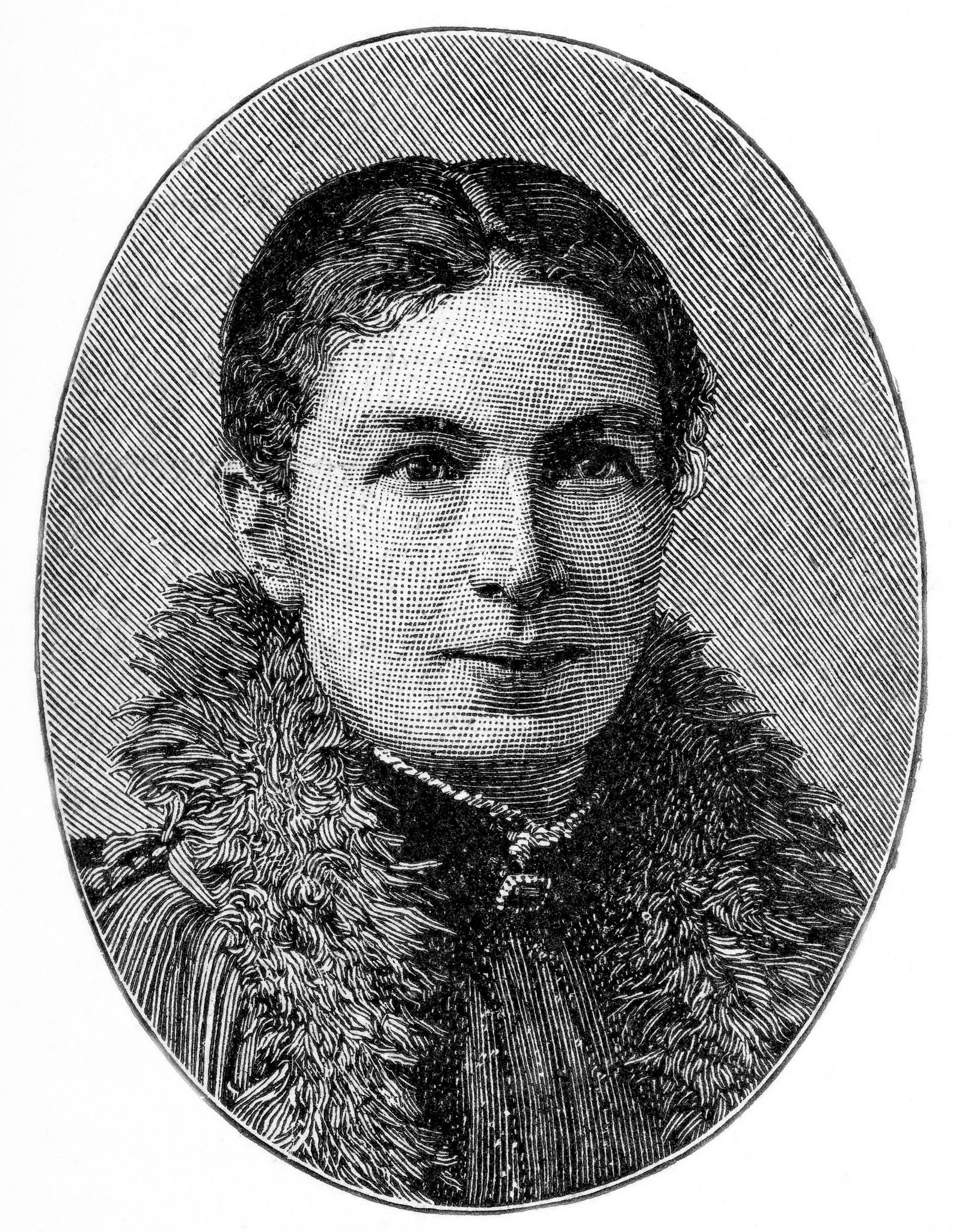
 Mary Jane Ward (née Martin; June 6, 1851 – March 14, 1933), known to her inner circle as "Minnie," was an Irish-born educator, pioneering scholar, and active British
suffragist.
Mary Jane Ward (née Martin; June 6, 1851 – March 14, 1933), known to her inner circle as "Minnie," was an Irish-born educator, pioneering scholar, and active British
suffragist.Queer Places:
University of Cambridge, 4 Mill Ln, Cambridge CB2 1RZ
6 Selwyn Gardens, Cambridge CB3 9AX, UK
Mary Jane Ward (née Martin; June 6, 1851 – March 14, 1933), known to her inner circle as "Minnie," was an Irish-born educator, pioneering scholar, and active British
suffragist.
Born in Armagh, Ireland, as the third of twelve children to a Congregational minister.
Despite receiving little formal childhood schooling due to limited family finances, she won a scholarship for the Higher Local Examination in 1876. She entered the newly established Newnham Hall (later Newnham College) at age 25.
In 1879, Ward became the first woman to achieve First Class honors in the Moral Sciences Tripos at Cambridge University. She subsequently served as a lecturer at Newnham.
In 1884, she married the philosopher and psychologist James Ward, with whom she raised three children.
Unlike some of her Victorian academic peers, Ward was an ardent campaigner for equal rights:
From 1905 to 1915, she served as the Honorary Secretary for the Cambridge branch of the National Union of Women's Suffrage Societies (NUWSS).
She wrote the popular fundraising play Man and Woman: the Question of the Day (1908), which was performed by local suffrage groups across the UK.
In 1890, Ward became one of the 12 founding/core members of the Ladies Dining Society in Cambridge.
Established by Louise Creighton and Kathleen Lyttelton, the group comprised Cambridge faculty wives, academics, and reformers (including Eleanor Sidgwick and Mary Paley Marshall). It provided a private, intellectual space for women to meet, debate, and eat dinner without their husbands present—a bold assertion of female public autonomy at the time.
Contemporaries noted that her "quick Irish speech bubbled out when she was excited," describing her as a energetic campaigner driven by "the urge of things to fight for".
Mary Ward was in a heterosexual marriage to James Ward from 1884 until his death. There is no direct historical evidence indicating that she personally identified as queer or engaged in same-sex relationships.
Her primary connections to LGBTQ history exist through the homosocial and queer-adjacent academic networks of late Victorian Cambridge:
Institutions like Newnham College and networks like the Ladies' Dining Society fostered deep emotional bonds, romantic friendships, and shared domesticity among women, providing early infrastructure for women living independently of traditional patriarchal structures.
Many of her intellectual colleagues and contemporaries at Newnham and in the broader suffrage movement were early figures in same-sex romantic partnerships or gender-nonconforming academic circles.
References:
Support this project
This website is a passion project researched, developed, and funded entirely by me. If you find the content valuable and would like to help support the ongoing research and hosting costs, any contribution is deeply appreciated.
Thank you for keeping this independent resource alive!
My books on Amazon: Elisa Rolle's books